Monthly Archives

42 Articles

Uncategorized

Truth and lying affecting the economy.

Posted by Nesha Mooteram (She/her) on

Nietzche pointed out many things that stood out but one things that stood out the most to me was “two classes” where it was discussed that there were property owners or property less workers. In my opinion property brought along a major issue where people were mistreated such as people who worked extremely hard and yet didn’t own property. There was no evolvement, working and owning property is to benefit and help the economy grow. Workers were losing reality, people worked a lot and yet saw no profit and yet the production increased in power and range. Nietzche pointed out that when you work so hard your life isn’t your life anymore. That job you are doing then starts to own your life and control how you live. To create, work and live, it is dependent on something else. For example, some people can’t live unless their working and some people can’t create things unless they have an idea. “Labour means life” & “become a slave of his object” (pg 766) in a sort of sense that means that you have to work and if you are working you are making your whole life revolve around it. The man is putting more effort into the object along with more time and value and your giving yourself less of that and degrading those categories on you as a person. To me so far nietzche is trying to explain that you’ll come to realization that when putting your all into work and labour you start to lose yourself. The only thing you’ll actually want to do is work on that specific something or object. It’s becomes mentally and physically draining and you realize and think to yourself “is this benefiting me?”. You work and work and you aren’t growing but the economy will start too and you are left there without property. Workers work in conditions that disturb their life. Going on to page 770, I understood that society happens to follow various orders. What automatically popped in my head was “monkey see monkey do” something my parents always said to me. Don’t follow what others do, be yourself. Along with “social rank”, I believe that’s why workers were slaved to do more then they should and property owners didn’t do much. Over time the economy started to grow way more. There were Chinese markets and trade, development started. Markets grew rapidly and there was never enough, always space for more and more. There was commerce, people bought things and sold it back for profit, something we still do now. These few pages spoke a lot on how truth and lying was occurring in economy and affected the growth. Within time I’d believe the truth came out and people started to make change to better themselves and their society.

Uncategorized

Foucault, Borges, Nietzsche

Posted by Jeff Allred (he/him/his) on
Michel Foucault’s The Order of Things is an enormously influential theory of how the West has constructed its own “ways of knowing” by obscuring the contingencies of certain knowledge and projecting a fantasy of a pure, objective knowledge. Foucault borrows heavily from Nietzsche in his distinctive “genealogical” method of narrating history. We can see some of the influence of Nietzsche’s work here in ways that anticipate much of what we’ll talk about in the future. Foucault’s book begins with a riff on a passage from the Argentinian writer Jorge Luis Borges. Here is the first page more or less in full:
The point, of course, is not the obvious and chauvenistic one: what a zany people those Chinese are!? The point, rather, is more like “what must our Encyclopedias look like to the Other? How are our regimes that make “data” and its analysis seem so transparent and objective equally absurd and humorous and continent when looking in from the outside?
Uncategorized

Nietzsche: Through the eyes of the beholder

Posted by Gigi Hernandez (She/Her/Ellx/Lei) on

The Language Nerds added a new photo. - The Language Nerds

Modern Family Season 6, Episode 07

Nietzsche, questioning and admiring himself throughout “On Truth and Lying in a Non-Moral Sense”, is trying to speak in the fourth dimension, criticizing the people of the age, to explain how it is the norm to be deceive oneself realizing the truth. This concept is similar to translations within languages; when certain words cannot be transcribed to represent the original word as a whole. Nietzsche (765) describes people being fake to oneself and to one another, in an effort to

“preserve himself in relation to another, in the state of nature he mostly used his intellect for conceal-ment and dissimulation; however, because necessity and boredom also lead men to want to live in societies and herds, they need a peace treaty…”

In order to have a moment of peace, people let go of what they believe in to assimilate into society, burying deep inside them their true self. It gets confusing to what is the “truth” (766-771), in sum, truth is an illusion depicted through metaphors (768) but these truths are unique,

“the only things we really know about them[, the relations between things,] are things which we bring to bear on them”.

Nietzsche states that things are things because we make them “things”. The way one person sees something can differ from what another seed it as, but as a society we have to adjust this thing with a name.

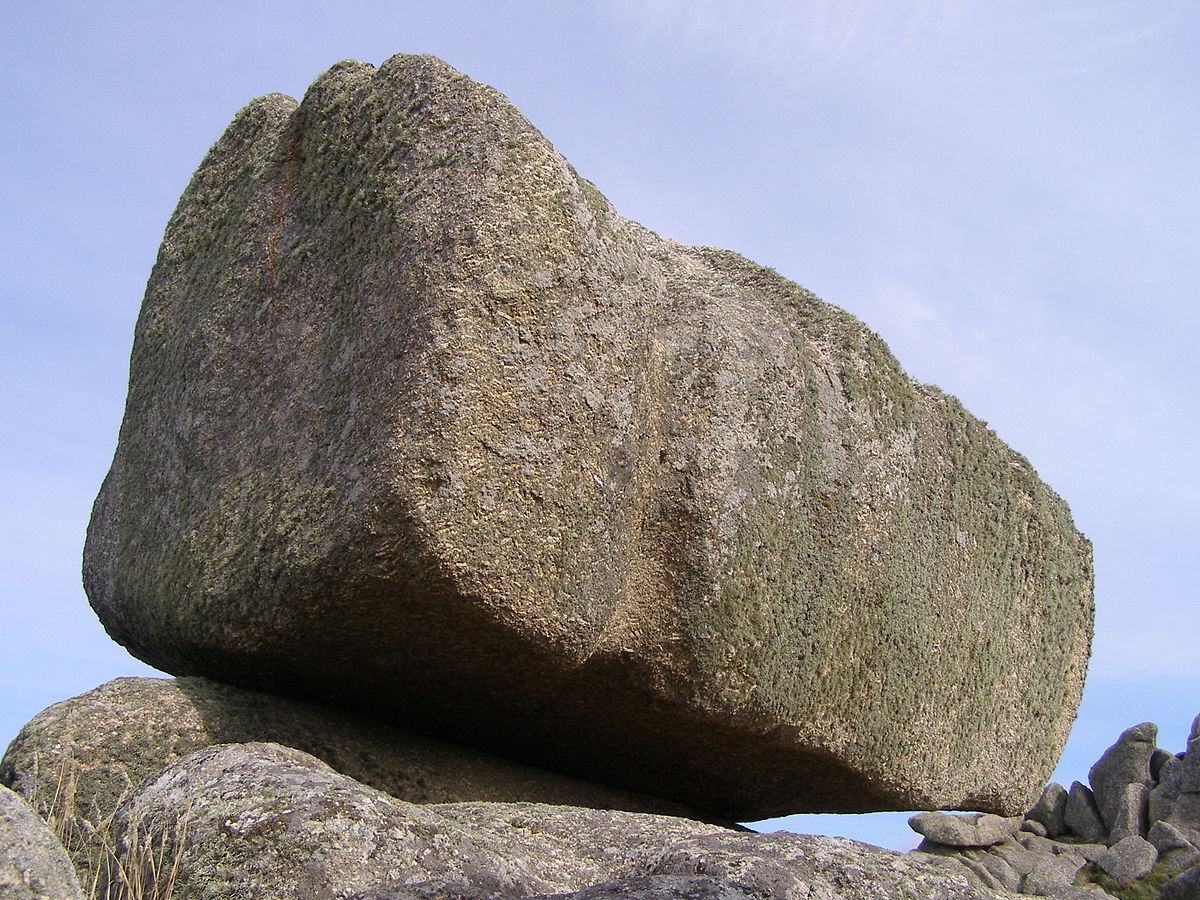
For example, what is a mental picture of rock to you? A bland gray colored rock perhaps, I pictured sand first and caves. Nietzsche would say that we do not have a precise concept of what it is supposed to look like but depends on what we have been taught and what is in the area around us. For the word “rock”, it could’ve been a pebble or even testicles, according to Google, as part of vulgar slang.

Logan Rock - Wikipedia

First picture of rock, grayish and rectangular shape, in Google Images as of 9AM on 02/04/2022.

Now, following on in Google, for me the first thing that appears is this picture from a Wikipedia page.  All of these things have a similar ideal in common, a “rock” is roundish-shape, bland in color, in an empty area, perhaps surrounded by other rocks.

Uncategorized

Lies for the Sake of Human Survival

Posted by Zayen Yusuf on

Nietzsche in “On Truth and Lying in a Non-Moral Sense” analyzes humanity’s natural tendencies of striving for truth when they themselves are inherently blind. He begins the analysis by stating how by pure cosmic chance that humanity was able to simply be in a very small part of the universe’s history (752). All animals have distinct features that aid in their fight to continue being, but the humans are unique animals in which they were able to develop their sense of intelligence to persist beyond their boundaries. Nietzsche explains that this intelligence allows humans to be cognizant of their natural world, but it may devolve into deception, as they only use their stimuli to give the material world its meaning (753). Such granting of meaning is a toil that many do not partake in, and instead, they regress. They instead use their stimuli to indulge in the material and dissimulate. Additionally, he states that the mere fact that people fetishize dreams and not humor them, is a reason that supports that people are inherently fine with being deceived. Only when the deceit produces obvious issues is when they have a problem with it. Nietzsche writes:

This art of dissimulation reaches its peak in humankind, where deception, flattery, lying and cheating, speaking behind the backs of others, keeping up appearances, living in borrowed finery, wearing masks, the drapery of convention, play-acting for the benefit of others and oneself—in short, the constant fluttering of human beings around the one flame of vanity is so much the rule and the law that there is virtually nothing which defies understanding so much as the fact that an honest and pure drive towards truth should ever have emerged in them. (753)

Nietzsche’s style bleeds through very subtly when he complains about how a menagerie of debauchers had all come together to create the current state of human politics. The concepts of humans returning to their animalistic selves and preventing their advancements of philosophies, as written by Nietzsche, is very Socratic in nature. However, in Nietzsche’s analysis, although those who attempt to concern themselves with the truth are still natural philosophers, they are intrinsically making many assumptions about the material world, as they cannot perceive the the true essence of forms. Humans categorically sort the material world in concepts by analyzing the macro characteristics shared between objects and ignoring the micro characteristics (754-756). They do the sorting of characteristics through their stimuli, which was a previously aforementioned pitfall in human intelligence. Then they give them words of association. Because of this, we can conclude that Nietzsche would believe that the relationship between our concept of a “rock”, the word “rock”, and the true essence of a “rock” itself is all very different, but still connected. The concept of a “rock” is the category that encompasses all rocks and the true essence of a “rock” is something we cannot truly perceive with our measly stimuli. The “word” rock is the bridge that use to tie the concept and the essence together (756).

Uncategorized

Truth, Deception and Reality

Posted by Eliza Ynoa (She/her) on

In Nietzsche’s “On Truth and Lying in a Non-Moral Sense”, He explores the genesis of Truth, Lies, the differences between the two and how they intersect in more ways than we believe. Nietzsche begins the piece with a jarring truth about humanity, The universe existed before us and it will continue after us. He proposes human intellect is “purposeless and arbitrary” within nature and only serves and exists within the bounds of humanity. (752)  He argues our intellect is merely a tool for survival as the horns or teeth would be on another animal and its main function being “concealment and dissimulation” making “deception” more natural than truth. (753) In fact, he proposes ideas of shared “truths” created language which was birthed from “necessity and boredom” that left humans wanting to build societies.

Nietzsche believes language, which is constructed on a collective social “peace treaty” and is the foundation of the first laws of truth, as well as cognition is heavily reliant on deception. (753) Humans perceive the world in forms, and that informs our limited ability to categorize and create “metaphors” for there existence. Nietzsche explores the flaws in languages ability to accurately describe nature. According to Nietzsche, each word becomes a concept and concepts are created by “dropping individual differences arbitrarily,” (755) So “concepts” like “leaf” “tree” “flower” are born, but Nietzsche clarifies “nature knows neither forms nor concepts and hence no species, but only an ‘X’ which is inaccessible to us and indefinable by us.” (755) further arguing that truth isn’t something natural rather a human invention. There is no link between language and reality so it is all deception and metaphors accepted as truths. It is through language that deception is possible because language dictates what is “true” and “not true”. Language imposes meaning on nature, and since we shape language to fit our needs for survival, truth is not fixed. Nietzsche talks of how truths can contradict each other and often do and how what was once deception or metaphors can become truth overtime.

Self dissimulation is human nature, it saves us from misery and is a survival tool. Nietzsche says,

That drive to form metaphors, that fundamental human drive which can- not be left out of consideration for even a second without also leaving out human beings themselves, is in truth not defeated, indeed hardly even tamed (759)

Nietzsche observes dissimulation and deception as something humans often welcome and seek out as long as it is not harmful. He says “…human beings themselves have an unconquerable urge to let them- selves be deceived,” (760) and cites the fascination of one listening to a fairytale or epic poem. We know it is not true, but are drawn to it nonetheless.

Uncategorized

NIETZSCHE BY BRIAN JONES

Posted by Brian Jones (He/Him) on

Nietzsche believes that deception is at the heart of language and cognition because people use language to conceal and mask the truth in an attempt to help amplify the basic human instinct of belonging. When it comes to the relationship between a mental picture of an object, the word, and the actual object, Nietzsche believes that the “thing in itself (which is precisely what the pure truth, apart from any of its consequences, would be)” is simply something that cannot be understood to the creator of language and is only made in relation to the things humans know. We can only compare these objects to thing that we know of. On page 768, Nietzsche asks himself, “What, then, is truth?” He later answers this by saying that truth is a combination of human interaction that has been changed altered, defined, moved which over time has been heavily intwined into how humans interact. The truth is an illusion of metaphors and other rhetorical devices that has lost meaning and effectiveness over time. Nietzsche later states that humans are “architectural geniuses.” This is due to the fact that humans can conceptualize the things they do not know wether it be a rock or a leaf or another object or idea into something that is easier to understand. This is due in part to the human minds ability to associate language and words that are understood to said object and formulate an idea based off of other concepts and ideas that give us a better understanding. This is despite (as Nietzsche stated earlier in his work) Nietzsches view that language is only a mask and that language is created to “give meaning” to object but in fact it only further entangles them. This implies that language does not build anything particularly new or true but rather it takes an object, connects it to a word or sound and categorizes it into something that humans grow to understand as that object and masks the true meaning of the object they see. Two types of humanities that Nietzsche got onto describe later in the essay is the intuitive mind and the logical mind. The intuitive mind and the logical mind are both tools for building  reality with “minimal dissimilation and maximal truthfulness.” However, something that’s “truth” is only what people agree on the truth to be. Nietzsche style questions the readers thought process and requires his readers to critically examine the way they view language as a construct that allows for true meaning to be lost in deception the of truth. He manages to describe interesting ideas that are broad and expansive yet focuses his thoughts in a manner that makes more sense the more the reader analyzes Nietzsche’s meaning.

Uncategorized

The Division in Humanity

Posted by Britney Davila on

As kids when growing up we are often told to always tell the truth, and are explained why dishonesty is wrong. As we get older these beliefs and morals stick with us forever and are almost never questioned. German philosopher Frederich Nietzsche offers a different perspective into truth and dishonesty in his essay “On Truth and Lie in a Non-Moral Sense” where he explains what being honest and dishonest may really be for humans. Nietzsche offers the idea that as a humanity we follow whatever is seen to be “acceptable”, such as being honest, and while most follow along there are others who create this new side of humanity.

Nietzsche argued that telling the truth is something humanity is taught to do from the very beginning, something that is what we all follow due to society. Nietzsche seems to go beyond honesty and tries to use it as a way to explain how humanity conforms to whatever is seen as acceptable in society. For instance, he describes how being truthful is a pact that we all make as humans yet it is alright to not be completely truthful in other cases. Nietzsche states:

But man has an invincible inclination to allow himself to be deceived and is, as it were, enchanted with happiness when the rhapsodist tells him epic fables as if they were true, or when the actor in the theater acts more royally than any real king. So long as it is able to deceive without injuring, that master of deception, the intellect, is free; it is released from its former slavery and celebrates it Saturnalia (Nietzsche 7).

Society is told that one must always tell the truth and if one does otherwise they will be perceived in a negative way, but yet there are exceptions that we must allow. In this case made up fairytales, fables, or other stories are allowed to lie to us and create false realities because they are not necessarily “injuring” humans. How Nietzsche seems to want to explain this is by saying that overall “truths”, “lies”, and “injuring” are concepts humanity has made up and because no one really questions it it continues to happen. That does not mean that all humans conform to these ideas as he goes on to explain.

Near the end of his essay Nietzsche divides humanity up into two different groups because of this concept of “truth” and “lies”. He believes that there is the group of humanity that does not question society but follows along and does as told, as like in a simulation. While the other group of humanity eventually breaks out of these norms and creates their own concepts and beliefs where they can govern themselves. Those who continue inside of these societal norms forever, when falling, will struggle much harder than those who break out of the norms and learn how to think for themselves where they will grow and become even stronger. Nietzsche states:

To be sure, he suffers more intensely, when he suffers; he even suffers more frequently, since he does not understand how to learn from experience and keeps falling over and over again into the same ditch. He is then just as irrational in sorrow as he is in happiness: he cries aloud and will not be consoled. How differently the stoical man who learns from experience and governs himself by concepts is affected by the same misfortunes! (Nietzsche 8).

Nietzsche while referring to truths and lies throughout his essay seems to be rather focusing on societal norms as a whole. He attempts to give examples with the truth and lie concepts, yet gives readers more to wonder about. What other concepts have been created in society yet never question?

Uncategorized

Stubborn as a Bull

Posted by Benjamin J Burgos (he/him) on

Nietzsche’s theory on truth and lies tackles the tendencies of humans. The opening paragraphs of “On Truth and Lying in a Nonmoral Sense”, discuss an alternate universe where clever animals have invented cognition, however, their achievements were not able to be celebrated because of an explosion that literally and metaphorically obliterated this world. Now this information is far-fetched, and it already leaves the reader (including myself) in a state of confusion. I immediately asked myself, what do brilliant animals in a distant land have to do with the nature of truth and lies? As I patiently navigated through the rest of Nietzsche’s ideas, it became apparent that Nietzsche possibly started off his writing with a bizarre scenario to demonstrate the stubbornness that is found in an individual’s ideas. After unpacking the events that occurred on the strange planet, Nietzsche writes, “so the proudest man of all, the philosopher, wants to see, on all sides, the eyes of the universe trained, as through telescopes, on his thoughts and deeds.” (764). Even though the storyline Nietzsche used is extreme, it captures how people think of ideas in their head that are true, yet the public believes that their idea is insane… a lie. For example, there was a time where European scholars believed that the Earth was flat. Since this was an accepted idea amongst most European scholars, everyone else who argued that the Earth is a sphere were seen as liars. Whenever individuals attempted to explain why the Earth is a sphere, the other European scholars were left bewildered. Similar to how I dismissed the idea of an alternate universe that was destroyed, European scholars dismissed anyone who tried to invalidate their belief.

Today, most individuals understand the Earth is not flat, however, the bigger picture is that Nietzsche is trying to showcase how ideas are not certain because of human pride. Since everyone wants their ideas to be accepted and are not opened to alternate conclusions that are based off a concept, it becomes difficult to distinguish between a truth and a lie. Therefore, Nietzsche claims that “truths are illusions that we have forgotten are illusions.” (768). Furthermore, Nietzsche mentions “fog that surrounds human eyes,” (765) and that fog or pride distorts truth and creates a world consumed by false realities.

Let’s step away from historical European scholars arguing over the Earth and consider how the truth is almost impossible to find nowadays because of social media. Social media has created an environment where it is extremely easy to compare yourself to people. Yet, it is not a fair comparison because oftentimes people will compare their worse version of themselves with a “perfect” image that is seen online. An example of this would be if someone posts on their social media a picture of their grades and it is all A’s. Another person who did not get all A’s and views this post will automatically believe that they are dumb or everyone else around them is achieving their academic dream while they are struggling. The person who did not get all A’s fails to realize that the other individual had nights where they also felt dumb, or they failed an assignment in the beginning of the semester. Life is not perfect, and everyone goes through their own challenges, yet social media provides a space where an individual is able to craft their “flawless life”. People do not tend to post negative content related to their lives because they want to keep a certain facade. However, this distorts the truth about their lives because a life consists of ups and downs. Nietzsche would view social media as an affirmation for his belief that pride creates lies which means that the truth can never exist. Individuals tend to create false realities and become consumed in them to hide from people who challenge their ideas.

Uncategorized

The Deception of Good and Evil

Posted by Faustino Mendez (He/Him) on

Mankind throughout the years has developed a sense of what “Good” and “Evil” should be defined as. For all we know, Good could mean performing positive changes to benefit oneself or others. While Bad could mean inflicting negative effects towards someone or something. As time moves forward, people have this ability to change the way society works, in a meaningful way that can alter the way we view history. Do sense and will have a connection with these words? How can one truly define Good and Evil? Was it meant to be questioned and have a never-ending answer?

Maybe in a couple of centuries into the future, what we view as “normal” in today’s world could be viewed as a terrible custom that our descendants will interpret as. Presented by the text, it mentions “The Latin malus may designate the common man as the pre-Aryan occupant of the soil of Italy who was distinguished most obviously from the blond, that is Aryan, conqueror race by his color” (30). Previously, many claimed that the Aryan race is the most superior out of all and should rule everyone else who is not/appears like them. During this time, this was a positive for the Aryans while being different (such as having dark hair) would mean that you’re evil or represent bad against the good (in this case, the Aryans).

This ties in strongly with some beliefs with religions. Believers and followers will be following the directions/teachings of their respective Gods and will have their own definitions of “Good” and “Evil”. Seeing as most people know that there are traditions in which followers will take upon an even where they must fast for a certain number of days (varies by religion). In Catholicism, we fast for penance for our sins. The Catholics, believe that this is a good deed in order to redeem oneself, for others this can be seen as a bad thing. One of the bad reasons could be harming ourselves by starvation.

Good and Bad aren’t defined by most of us, everyone defines those two words differently. Either those words are defined to us by experience (What satisfies or upsets us), wealth (The means in what money can provide vs how it can manipulate/change people), or even religion (What God believes is good for us and what he deems to be unholy).  But as time moves on, Good and Bad continue to be re-defined by the people on this Earth. No matter who tries to best define it, it seems as if these words will have a limbo for people to follow.


-Faustino Mendez

Uncategorized

Truth, the Envolving Lie

Posted by Stephanie Rybkiewicz (she/her) on

Truth to Friedrich Nietzsche is nothing more than the human mind’s ever-changing perceptions. The truth was established based on what people wanted to hear in order to create a feeling of reality that appealed to people’s minds and intellects. Truth is founded on the creation of metaphors that have evolved into a type of belief and, as a result, are seen as the truth upon which reality is founded. According to Friedrich Nietzsche, in his piece, “On Truth and Lying in a Non-Moral Sense, he believes that truth is “a mobile army of metaphors, metonymies, anthro- pomorphisms, in short a sum of human relations which have been subjected to poetic and rhetorical intensification, translation; and decoration” (878). To put it another way, there really is no such thing as truth. Truth is nothing more than a set of metaphors devised to produce an appealing aesthetic for humans. Then there’s the question of whether truth is the same for everyone or if the truth is only accepted when people wish to accept it. Friedrich Nietzsche thought that society forces people to be truthful. But, if being truthful is a social requirement, who defines what constitutes truth and what constitutes a lie? This is the question that Nietzsche brings up. We, as humans, consider truth to be a fact. A human who states the facts is seen as a trustworthy individual, but those who lie are regarded as threats to society. What if, on the other hand, people believe in two separate truths? Can truths change depending on people’s perceptions and the reality that has been forced on them? Yes, Friedrich Nietzsche believes they can, and as a result, he believes truth is nothing more than a never-ending army of metaphors. Metaphors were created on the basis of tolerance and logic. If people have different acceptances and logic, then there is no such thing as truth. There is only a list of never-ending metaphors and perceptions that vary within individuals. “The feeling that one is obliged to describe one thing as red, another as cold, and a third as dumb, prompts a moral impulse which pertains to truth”(878). What causes something to get cold? Is it the truth if something is cold? Is it possible for people’s perceptions of cold to be subjective? Friedrich Nietzsche is attempting to persuade his audience of the importance of these problems. Truth is derived from cultural ideas that have evolved into “customary metaphors” and, as a result, are nothing more than deceptive illusions that have been deceiving people for years. A fact is something that is classified as true, but where did such facts come from if not from science? “Coins which, having lost their stamp, are now regarded as metal and no longer as coins” (878). When coins lose their stamp, who came up with the idea that they are no longer coins? Why does this one concept come to pass and become a common metaphor that forces itself on society? The conclusion is that humans are duped into believing the truth. Humans pursue the truth because if they don’t, society will judge them as untrustworthy. There is no such thing as reality because there is no such thing as truth. Reality is built on metaphors that have been developed imaginatively. Reality is nothing more than a reflection of what humans have made for themselves after being deluded by the incessant yearning for truth. What is true and what is a lie is depicted through feelings. The terms “feeling” and “reason” are both metaphorical and subjective. So, is the truth really the truth, or is everything all a lie?


Skip to toolbar